Warning Signs of Home Foundation Problems | Inspection Guide
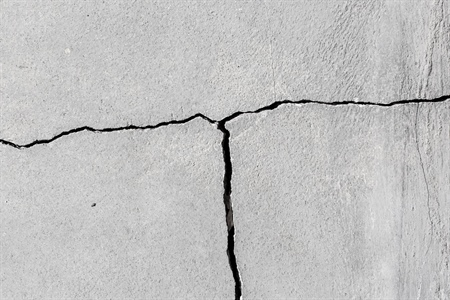
For many homeowners, a house is more than just a financial asset; it is a sanctuary of safety and structural security. However, beneath the paint, drywall, and finished flooring lies the most critical component of the entire structure: the foundation. When a foundation begins to compromise, it rarely happens overnight without warning. Instead, the house speaks through subtle structural shifts, microscopic fractures, and architectural misalignments that, if left unaddressed, can evolve into catastrophic and costly failures. Recognizing these early warning signs is paramount to preserving both the safety and the market value of your property, ensuring that minor settling does not deteriorate into a widespread structural emergency.
To fully protect your investment, it is essential to understand the underlying mechanics of structural instability. Homeowners must become adept at identifying what causes baseline fractures, distinguishing between benign and severe masonry separations, and recognizing how shifting soil profiles manifest in everyday interior annoyances. By examining the precise causes of masonry cracks, evaluating the severity of horizontal versus vertical splits, tracing the roots of uneven flooring, and analyzing why doors and windows suddenly bind can signal deep structural distress, you can accurately gauge when to seek a professional foundation inspection. Armed with advanced architectural insights, you will be fully prepared to identify early structural movement before it threatens the core stability of your home, allowing DMC Home Inspections to provide the comprehensive diagnostic clarity required for long-term property preservation.
Understanding the Primary Causes of Home Foundation Cracks
Foundation fractures are primarily driven by the complex relationship between a building's mass and the shifting mechanics of the soil beneath it. Hydrostatic pressure represents one of the most destructive forces in soil mechanics; as clay-rich soils absorb water, they expand substantially, exerting immense lateral pressure against subterranean masonry walls. Conversely, during periods of drought, these same soils desiccate and shrink, leaving massive voids that rob the foundation of uniform structural support. This cyclic expansion and contraction destabilizes the surrounding earth, forcing the concrete or block footprint to bend and fracture under uneven loads.
Beyond moisture fluctuations, thermal stress, and substandard construction practices frequently accelerate material failure. As ambient temperatures fluctuate, concrete naturally undergoes minor volumetric changes, which can manifest as hairline fractures if expansion joints are inadequate or poorly placed. Furthermore, if the original construction team improperly compacted the site soil or utilized an incorrect water-to-cement ratio during the initial pour, the cured material will inherently possess lower tensile strength. When structural loads settle unevenly across these compromised zones, the material fails along lines of least resistance, highlighting the vital importance of scheduling an expert foundation inspection to distinguish superficial curing defects from profound structural vulnerabilities.
Are Horizontal Foundation Cracks More Serious Than Vertical Cracks?
In structural forensics, the orientation of a concrete fracture dictates its severity and the nature of the failure taking place. Vertical cracks are exceedingly common in residential architecture and are frequently classified as non-structural anomalies. These separations typically develop during the early lifecycles of a building due to concrete shrinkage as the material cures, or as a result of minor, uniform vertical settling. Because the stress is aligned with the downward gravitational load of the home, vertical fissures rarely threaten the fundamental stability of the load-bearing walls, though they can act as conduits for water intrusion if left unsealed by a certified real estate inspector.
Horizontal cracks, by contrast, represent an acute structural emergency that requires immediate engineering intervention. These fissures indicate that the subterranean walls are bowing inward due to severe lateral hydrostatic pressure from saturated exterior soils. When the horizontal force exceeds the shear strength of the concrete or mortar joints, the wall snaps along its midpoint, severely compromising its load-bearing capacity and risking a sudden, catastrophic structural collapse. Homeowners must treat any horizontal separation with the utmost urgency, as it signals that the retaining capabilities of the foundation are actively failing under external environmental duress.
Can Uneven and Sloping Floors Indicate Severe Foundation Damage?
When a foundation experiences differential settlement—a phenomenon where one section of the structure sinks deeper or faster than the rest—the movement resonates through the entire framing system of the property. This structural imbalance directly manifests as sloping, uneven, or sagging floors across the upper living spaces. As the support footings drop, the heavy wooden joists and subflooring are forced out of their original horizontal plane, stretching fasteners, warping support beams, and causing significant deflection in the floor system.
The internal composition of the floor can provide critical clues regarding the location and severity of the underlying failure. In homes with crawl spaces or basements, unlevel floors often point to deteriorating or shifting pier columns, rotted support posts, or joists that have buckled under shifted weight distributions. In slab-on-grade homes, sloping floors can indicate that the underlying soil has eroded due to subterranean pipe leaks or improper exterior drainage, causing the heavy concrete pad to crack and sink into the resulting void. Ignoring these gradual changes can result in widespread interior finish damage and systemic structural warping.
Why Do Doors and Windows Stick When Foundation Issues Exist?
The fenestration units of a home—specifically the frames housing exterior doors and windows—are engineered to incredibly tight tolerances and require perfectly square openings to operate smoothly. When a foundation shifts, rotates, or settles unevenly, it warps the rigid rectangular geometry of the home's framing timber. This distortion shifts the rough openings into parallelograms, placing uneven, binding pressure directly onto the window sashes and door leaves, which causes them to stick, drag, or refuse to latch entirely.
While homeowners often misattribute sticking doors and windows to seasonal humidity, causing the wood to swell, structural binding displays distinct diagnostic differences. When shifting masonry is the root cause, the sticking is usually accompanied by diagonal hairline cracks propagating outward from the drywall corners of the affected frames. Furthermore, windows may develop mysterious gaps along their upper edges, and double-hung units may become impossible to lift safely, signaling that the structural load is compressing the frame and distorting the precise architectural alignments of the living space.
How to Identify Early Structural Movement in Your Property
Detecting early structural movement before it transforms into an expensive, irreversible structural failure requires a disciplined, proactive approach to home maintenance. Property owners should conduct bi-annual visual audits, paying close attention to the exterior grading and the straightness of the roofline and fascia boards. One of the most telling indicators of early movement is the appearance of stairstep cracks in exterior brickwork or concrete block masonry, which trace the path of shifting tension as a corner of the building settles into uncompacted or eroded soil profiles. Professional evaluation in Champlin by a certified specialist can pinpoint these subtle shifts long before they compromise upper floors.
Inside the living spaces, look for subtle separations where interior walls meet the ceiling, or gaps forming along the baseboards where the floor has pulled away from the drywall. In the basement or crawl space, inspect the perimeter walls for signs of moisture penetration, efflorescence, or freshly fallen masonry dust, which indicates active friction and stress within the material. Utilizing precision levels along framing members and tracking the expansion of existing wall fissures over time will provide the empirical data necessary to know when to engage the advanced diagnostic services of DMC Home Inspections to safeguard your home's future.
At DMC Home Inspections, we understand that protecting your home starts from the ground up, which is why we leave no stone unturned when evaluating the structural integrity of your foundation. Our InterNACHI and ASHI-trained foundation inspectors utilize an exhaustive 150-point building inspection process specifically designed to catch the early warning signs of settlement, lateral hydrostatic pressure, and shifting soils before they evolve into devastating structural failures. Whether you are dealing with puzzling vertical masonry cracks, alarming horizontal splits, sloping interior floors, binding window frames, or subtle stairstep separations in your exterior brickwork, our team provides the meticulous, objective diagnostics you need to make confident decisions about your property's preservation and long-term safety.
Do not wait for minor settling to compromise the safety, value, and structural longevity of your most significant investment. Our certified professionals stand ready to provide you with comprehensive, same-day digital reporting and honest, clear assessments regarding the exact condition of your home's infrastructure. To ensure absolute peace of mind and protect your family from hidden structural hazards, reach out to our expert team today to schedule your comprehensive residential evaluation.
DMC Home Inspections
7425 River Shore Ln, Champlin, MN 55316
Phone: 612-310-1692
Contact Us